
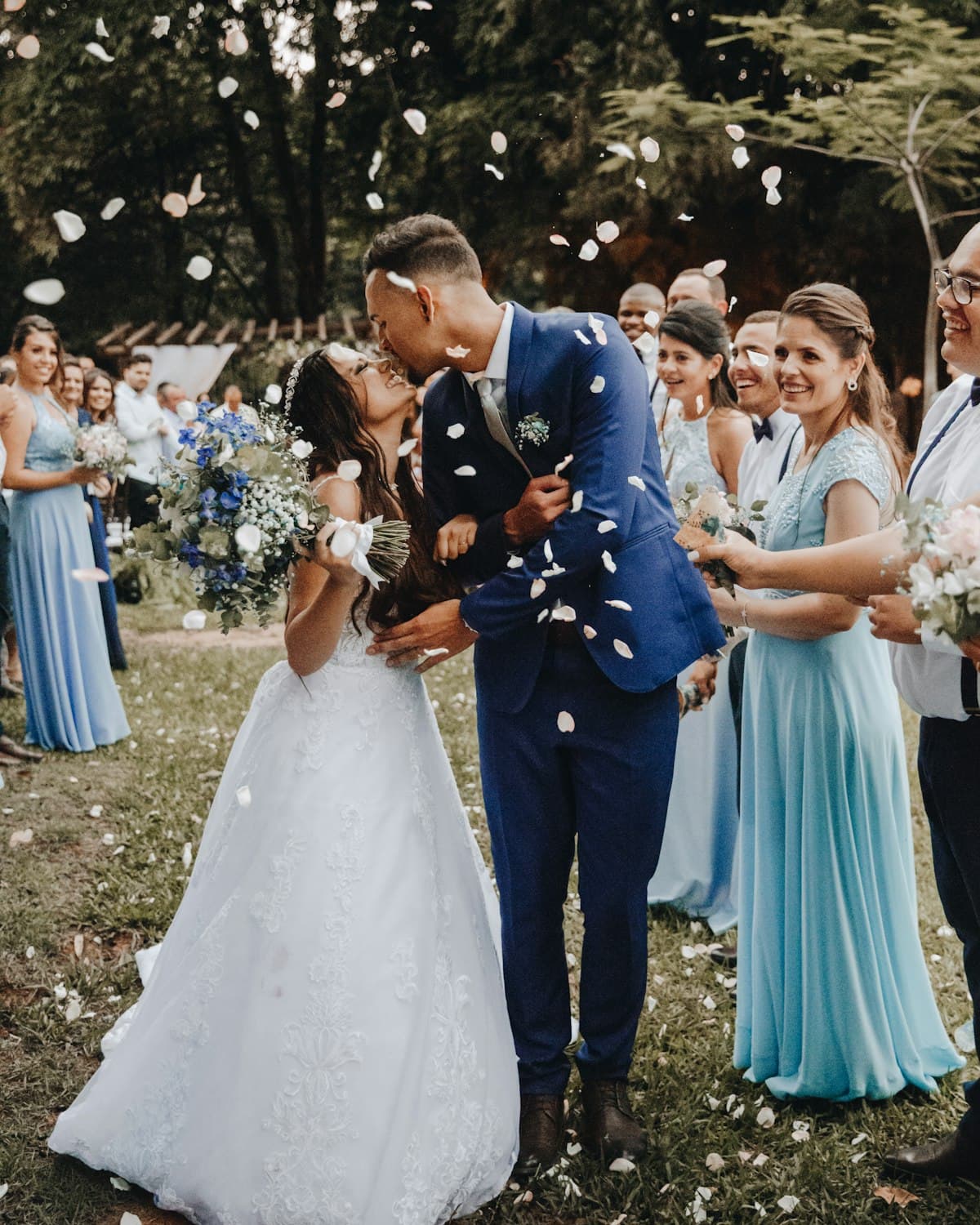
The wedding hashtag is a thirty-character advertisement for your marriage, stamped on a dinner napkin, and read by 150 people at once. It either works perfectly or it gets misspelled on Instagram and spends the next six years mixed in with someone else's wedding photos from 2019. The difference between those two outcomes is usually one letter.
Here are the rules — the do's you should actually follow, and the don'ts we see couples break every week on CoupleForge. Skip to the end if you want fifty tags generated from your actual names.
The Do's
Do say it out loud before you commit
The single most skipped step. Read your candidate hashtag aloud three times. Have someone else read it back. If either of you pauses, stumbles, or spells it wrong, your guests will too. A hashtag that doesn't survive conversation won't survive a reception.
Do search it on Instagram first
Before you print it on a welcome sign, type it into Instagram's search bar. If there are 400 photos from someone else's 2019 wedding already under #TheSmithWedding, your photos will be mixed in with theirs forever. Pick a version that's yours.
The easy fix: add the year (#TheSmiths2026), the place (#SmithsInNapa), or a playful modifier (#SmithsSaidIDo). Any of those knock the search collision down to near zero.
Do use PascalCase
#MeantToBe is readable. #meanttobe reads as one visual blob and guests will type it wrong. Capital letters inside the tag don't change the actual search result — Instagram is case-insensitive for hashtags — but they change how the human eye parses the word. Always use them.
Do keep it under 22 characters
Not a hard rule, but a strong one. Long hashtags get truncated in comments and preview text, and they're harder to type from memory. Aim for 15–20 characters including the #. Above 25, you're asking for trouble.
Do pick one primary and a few secondaries
One tag is the official hashtag — the napkin one, the welcome-sign one, the DJ-booth one. Two or three others soak up bonus moments: the bachelorette, the rehearsal, the getaway car. You don't have to cram everything into one tag. Let each moment get its own riff.
Do test for ambiguous letters
#IandJForever looks fine on paper. Out loud, it reads as Eye-and-Jay Forever. The lowercase I next to a reads as la to about a third of your guests. Use full names (#IsabelAndJordan) rather than initials. Same for l vs 1, O vs 0, and the ever-ambiguous rn (which reads as m).
The Don'ts
Don't use punctuation or spaces
Hashtags are letters and digits. No apostrophes, no hyphens, no underscores, no ampersands, no emojis. #Said_I_Do doesn't work — the underscores break the link. #JamesAndJill's doesn't work — the apostrophe breaks it. #Say"YES" really doesn't work. If your tag needs punctuation to read right, rewrite it.
Don't use anything with a double meaning
The name that sounds perfect to you at 11 p.m. in a wine-soaked planning session is the name your guests will see on the welcome sign at noon, stone sober, in front of their in-laws.
Real examples we've seen couples walk away from after saying them out loud:
#CoxWedding— technically their last names, technically a disaster.#TheButtsAreTyingTheKnot— their honest-to-god surname.#ShitzGettingMarried— the Shitz family, actual people.
The test: imagine the tag projected ten feet tall behind the DJ. If your parents' friends would wince, rework it.
Don't lean on your blended couple name unless it actually works
Not every name combo makes a good blend. If the portmanteau version of your two names sounds like a pharmaceutical (#Lexapril) or an off-brand cereal (#Mikenna), don't force it. Use the family name, the year, or a classic (#MeantToBe, #TyingTheKnot).
Don't pick it without your partner
You'd think this is obvious. It's not. Pet name, hashtag, first-dance song — get both people to sign off on all three before printing anything.
Don't be clever at the expense of searchable
#ShesTheBrideToBe is a lovely thought and a bad hashtag — too long, too generic, and will blend in with every other engagement party's tag. Specific beats clever. Your hashtag's job is to group your photos. It's not a press release.
Don't add too many
Three is the ceiling. A welcome sign with six hashtags on it reads as a homework assignment. Guests will use the first one and ignore the rest.
Free printable download
Free: 50 Printable Wedding Hashtag Signs
Calligraphy-style PDFs — the full set, ready to print at home. One email, no spam.
One email. No marketing spam. Unsubscribe in the footer of any message we send.
Special cases
Multi-day weddings
If you have a welcome dinner, a wedding day, and a morning-after brunch, it's tempting to give each a tag. Skip the sub-tags for small events. The main hashtag catches 95% of the photos and the grouping sorts itself out. The exception: destination weddings where the arrival day is a real event — then #SmithsInNapa as the main and #SmithsSayGoodMorningNapa for brunch works.
Destination weddings
Add the place, not the date. #BrangelinaInBali will pull in posts years after the wedding (the place doesn't change). #BrangelinaMay2026 will feel dated by June.
Multilingual guests
If half your family speaks Spanish and half English, pick English anyway — hashtags are ASCII-only. But post your welcome sign with a short translation caption underneath, so your Spanish-speaking aunt doesn't think the tag is a password.
Vow renewals and redo weddings
Yes, you can reuse your original tag. Add a suffix: #SmithsForever2036 works if the original was #Smiths2016. It quietly signals continuity and sorts the new photos separately.

Hashtag trends that are dating themselves
Hashtag aesthetics have a shelf life. A tag that was fresh in 2018 can read as a dated Pinterest-era artifact by 2026. The ones we've watched age out of current taste:
The rhyming couplet. #BeckyAndCheckyGetHitchy. These were everywhere from 2015 to 2019. They now read as try-hard. If your tag forces a rhyme that wouldn't exist otherwise, cut it.
The all-caps pun stack. #HESTHEKIMTOHERKANYE. Reads as a shouting match. Modern taste favors PascalCase over all-caps for readability and tone.
The explicit event-label suffix. #SarahAndTomGettingMarriedSaturdayMay22. Over-specified tags sound like copy-pasted calendar entries. A clean name + year is always stronger than a name + full date.
The TheTwoOfUs-style sentimental tag. #TheTwoOfUsForever, #OurLove2026. These aged out because they belong to everyone, not to a specific couple. Thin archives. Pick something that sounds like your names, not like a greeting card.
The emoji-simulation tag. #HeartsForever, #FourLeafLove. Hashtags can't carry emoji weight — the name should do the work. Emoji belong in the caption, not in the tag.
What's aging well in 2026: short blend names (#Milajules2026), surname-plus-year (#TheSmiths2026), and place-anchored tags (#SmithsInNapa). Simple, searchable, un-dated.
How hashtags behave across social platforms
Most wedding photos end up on three platforms, and each one treats hashtags slightly differently. Knowing the differences lets you use one tag well instead of overfitting to any single platform.
Instagram. Still the primary wedding-photo platform. Hashtag search is case-insensitive but respects punctuation (dropping it). Tags are clickable in captions but truncated in comment previews at around 30 characters. Best use: your primary tag goes in the first line of the caption on every post.
TikTok. The rising wedding-content platform, especially for Reels-style highlight clips. Hashtag performance is algorithmic rather than search-driven — a tag with fewer posts under it can actually help your clip get surfaced because TikTok treats unique tags as micro-niches. Your wedding tag likely gets better discovery here than on Instagram precisely because it's unique.
Pinterest. Often overlooked for weddings but huge for the planning phase. Pinterest hashtags work more like categorical labels (#rusticwedding, #napawedding) than personal identifiers. Your personal wedding hashtag is less useful here; use category hashtags instead and save the personal tag for the Instagram and TikTok cross-posts.
Facebook and X (formerly Twitter). Minor platforms for wedding content, but if your guest list skews older, Facebook may matter. Facebook hashtags work but carry less weight than on Instagram. X/Twitter is rarely used for wedding photos at scale.
The takeaway: pick one clean hashtag that works on Instagram, and use it everywhere. The same tag will behave correctly on all four major platforms because the rules (letters and digits only, no punctuation) are universal.
Test your hashtag before it prints
Three tests, in order:
- The aunt test. Text the candidate tag to your least-online relative and ask them to type it into Instagram. If they get it right first try, it works.
- The search test. Search it on Instagram. If there are under ten unrelated posts, you're clear. Over fifty, rework.
- The napkin test. Handwrite it at the size it'll appear on your welcome sign. If it's hard to read, the printer's version will be harder.
Pass all three, you've got it.
Frequently asked questions
Should the bride or groom pick the hashtag?
Neither, alone. Both should sign off on it before it's printed. Couple names, hashtags, and first-dance songs are three places where one-sided decisions reliably produce quiet resentment. Pick it together, or at least have one person propose and the other approve — never publish without both parties on board.
What if we have two last names?
Three options in order of preference: combine both surnames into a blend (OkaforSingh → #OkaforSinghs), use both with a connector (#OkaforAndSingh), or pick whichever is shorter and add the year (#Okafor2026). The blend is the strongest choice if the two surnames produce a pronounceable result; fall back to the connector version if they don't.
How do you handle guests who don't use social media?
You don't. Older guests won't post photos anyway, and that's fine — the hashtag is for the half of your guest list who are already on Instagram. What you can do is print the tag on a small card in the welcome bag with a one-sentence explanation ("Share your photos at #SmithsInNapa2026"), which gives non-users a nudge without pressure.
Is it cringey to use a couple name in the hashtag?
Only if the couple name is cringey. A well-made blend (#Milajules2026) reads as distinctive and modern. A forced blend that sounds like a pharmaceutical reads as cringey. The hashtag inherits the strength of the underlying couple name, so if the blend passes the rules in our couple name guide, the hashtag will too.
Do we need a hashtag for the rehearsal dinner?
No. Let the main hashtag cover everything. The only exception is if the rehearsal is at a visually distinct venue (e.g., a different city, a different style) and the photos would genuinely benefit from being separable — in which case #SmithsRehearsal as a secondary works. Otherwise, one tag, one archive.
How do we print the hashtag on physical materials?
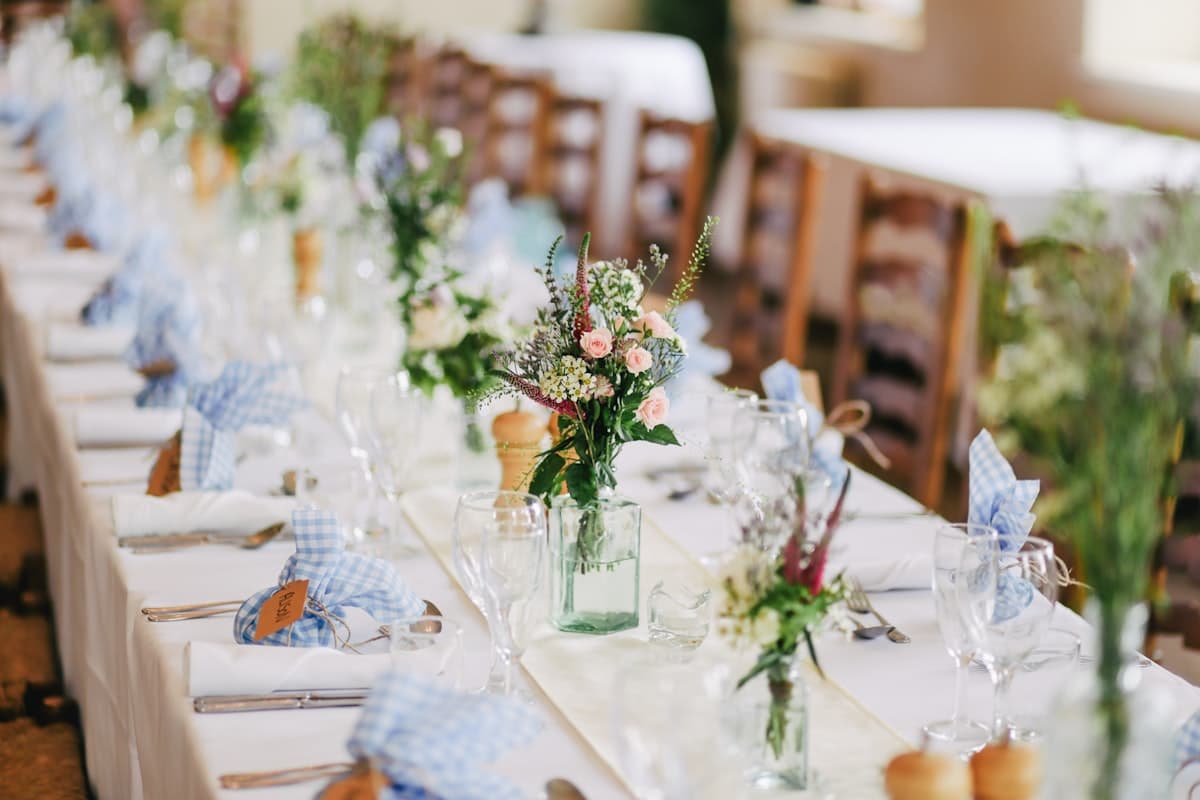
Welcome sign: prominent, centered, at least 4 inches tall so it reads from across the room. Menu cards: bottom-right corner, smaller than the menu text but clearly visible. Napkins and favors: optional — if your tag is short enough (under 15 characters), add it; if longer, skip it. Print the tag in the same font family as the rest of your wedding stationery so it reads as intentional, not as an afterthought.
Or skip straight to fifty options
If you want a list of 50+ hashtags tuned to your actual names, family names, year, and vibes — the same ones we use to write this blog's examples — that's what the generator does. Both first names, optional last names, a date, and a couple of vibes. Fifty tags in under a second, sorted best-first.
One of those will be the one your aunt remembers on her second drink. That's the one.